
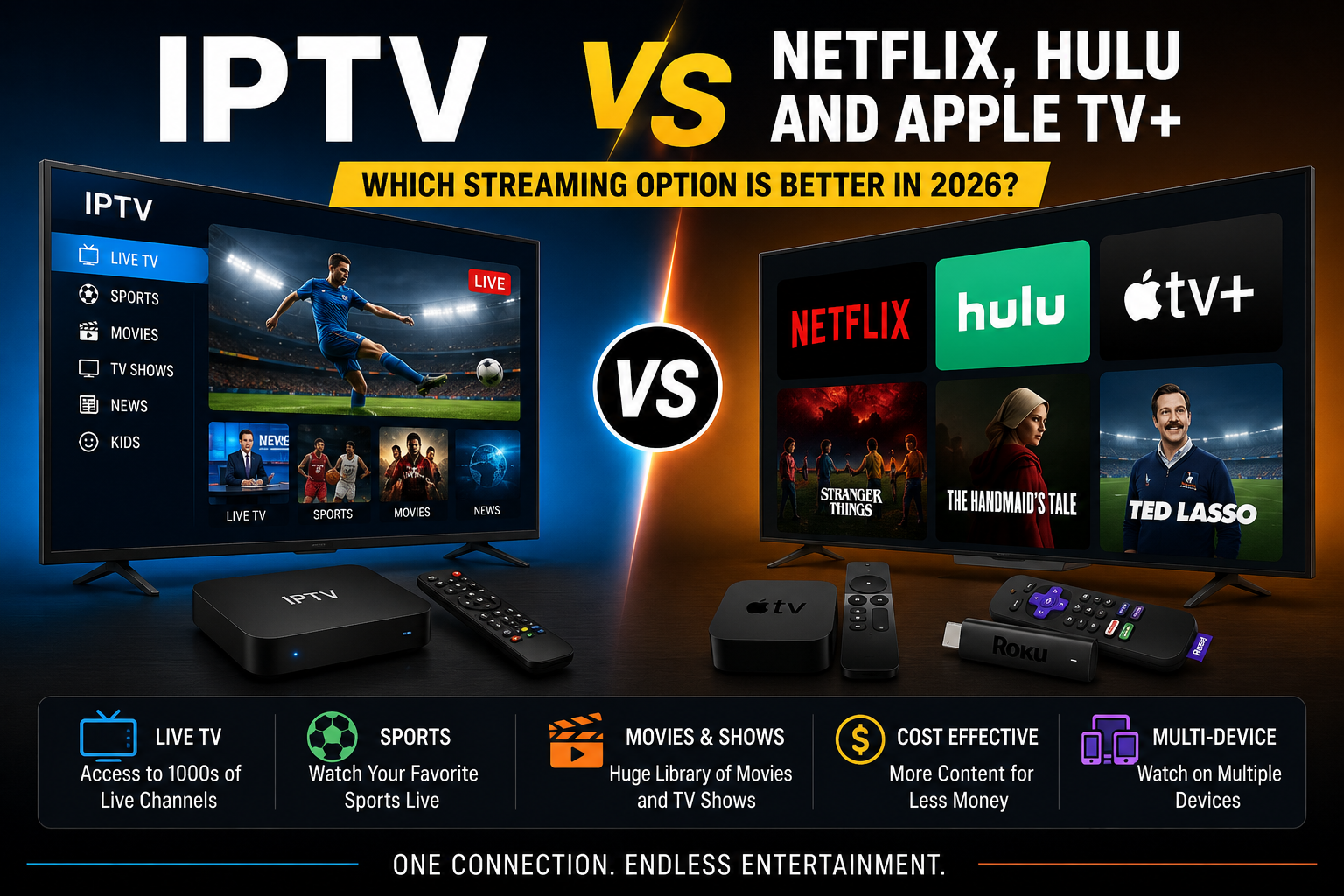
Why More People Are Comparing IPTV and Streaming Services
The IPTV vs Netflix, Hulu and Apple TV+ debate has become much more relevant in 2026 as streaming costs continue to climb. Not long ago, having a Netflix subscription felt like enough. Today, many households pay separately for Netflix, Hulu, Apple TV+, sports packages, and other entertainment services. Before long, the monthly bill starts looking a lot like an old cable subscription.
I was talking to a friend recently who was trying to watch a football match, catch up on a TV series his wife liked, and find a movie for family movie night. By the end of the conversation, he realized he was paying for four different streaming services and still couldn’t find everything in one place. That’s the situation many viewers find themselves in today.
This is where IPTV enters the conversation.
While traditional streaming services focus mainly on on-demand content, IPTV combines live television, sports, movies, news channels, and entertainment into a single viewing experience.
But does that automatically make IPTV better?
Not necessarily.
Let’s compare them side by side.
What Is the Difference Between IPTV and Netflix?
The biggest difference comes down to how content is delivered.
Netflix, Hulu, and Apple TV+ focus heavily on on-demand entertainment. You open the app, choose a movie or show, and start watching.
IPTV services are often designed to provide:
- Live TV channels
- Sports coverage
- News networks
- Movies
- On-demand content
If you’re new to IPTV technology, our guide on Internet Speed for IPTV explains some of the technical requirements needed for smooth streaming:
https://rushstreams.com/internet-speed-for-iptv/
Cost Comparison
One reason many people begin researching IPTV is simple: subscription fatigue.
Let’s look at a basic example.
| Service | Typical Monthly Cost |
|---|---|
| Netflix | Monthly Subscription |
| Hulu | Monthly Subscription |
| Apple TV+ | Monthly Subscription |
| Sports Add-ons | Additional Cost |
| IPTV | Single Subscription |
While exact prices vary, it’s easy to see how maintaining multiple streaming subscriptions can become expensive.
For official pricing and plans, visit:
Many users start comparing IPTV after realizing they’re paying for several separate services just to access sports, movies, and television content.
Sports and Live TV Coverage
This is where IPTV often stands out.
Imagine it’s the final minutes of a championship match. Friends are over, snacks are on the table, and the game is tied.
Then the stream freezes.
Many people immediately blame IPTV.
In reality, the issue is often their internet connection, device setup, or home network.
If you’ve experienced this before, our article on Why IPTV Freezes During Live Sports Events explores the most common causes and solutions:
https://rushstreams.com/why-iptv-freezes-during-live-sports-events/
Sports fans are often attracted to IPTV because it focuses heavily on live television and sporting events.
This includes:
- Football
- Basketball
- Tennis
- Boxing
- UFC
- Motorsports
If sports are your primary interest, you may also enjoy:
https://rushstreams.com/best-iptv-for-sports-streaming-in-2026/
Movies and Original Content
Netflix remains the leader in original programming.
Shows produced exclusively for Netflix have become global hits, and Apple TV+ has also built a reputation for high-quality original productions.
If your viewing habits revolve around:
- Original series
- Exclusive documentaries
- Premium productions
then traditional streaming services may still have the edge.
However, viewers who prioritize variety often appreciate IPTV’s broader channel selection.
Device Compatibility
The good news is that both IPTV and mainstream streaming services support most modern devices.
Popular options include:
- Amazon Firestick
- Android TV
- Smart TVs
- Tablets
- Smartphones
- PCs
Firestick remains one of the most popular devices for IPTV users.
If you’re considering that route, check out:
https://rushstreams.com/best-iptv-apps-for-firestick/
Streaming Quality and Reliability
Streaming quality depends on more than the service you choose.
Factors that affect performance include:
- Internet speed
- Wi-Fi congestion
- Router quality
- Device performance
You can test your connection using Ookla Speedtest before troubleshooting streaming issues.
Some users also choose to use VPN services when streaming.
If you’re wondering whether that’s necessary, read:
https://rushstreams.com/should-you-use-a-vpn-for-iptv/
Pros and Cons
IPTV
Pros:
- Live television
- Extensive sports coverage
- Large channel selection
- Single-service convenience
Cons:
- Quality varies between providers
- Initial setup may require more effort
Netflix, Hulu and Apple TV+
Pros:
- Premium original content
- User-friendly interfaces
- Strong recommendation systems
Cons:
- Multiple subscriptions often required
- Limited live sports options
- Monthly costs can add up
Frequently Asked Questions
Is IPTV cheaper than Netflix, Hulu and Apple TV+?
For many households paying for multiple subscriptions, IPTV can be a more cost-effective solution.
Can IPTV replace Netflix?
That depends on your viewing habits. Some viewers use IPTV alongside Netflix, while others prefer one service over the other.
Which option is best for sports fans?
Sports enthusiasts often prefer IPTV because of its focus on live television and sporting events.
Do I need fast internet for IPTV?
Yes. A stable internet connection is important for HD and 4K streaming.
Final Verdict
The IPTV vs Netflix, Hulu and Apple TV+ debate isn’t really about finding a universal winner.
It’s about understanding how you consume content.
If you mainly watch original series and on-demand entertainment, traditional streaming platforms remain excellent choices.
If you want live TV, sports, news channels, and a wider variety of content in one place, IPTV may provide greater value.
Before making a decision, consider what you actually watch each week. The service that delivers the content you use most often is usually the one that offers the best value.