
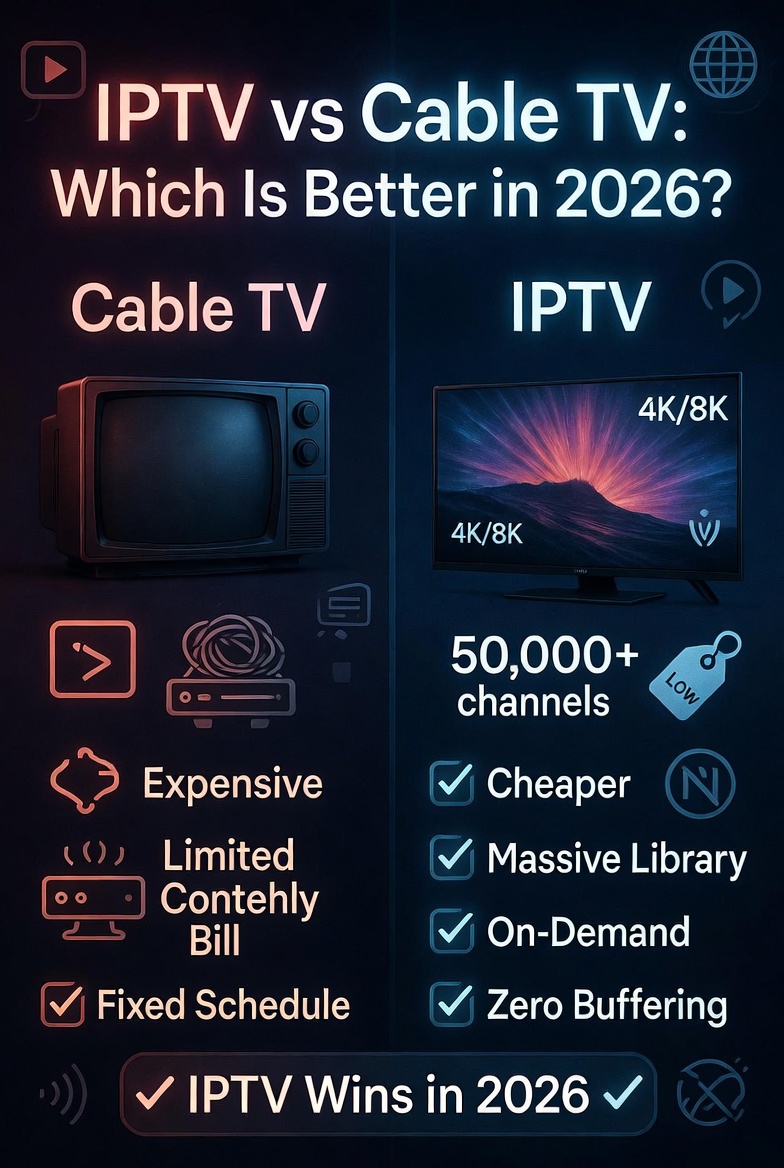
Television streaming has changed dramatically over the past few years, and many viewers are now comparing IPTV and traditional cable TV to decide which option offers the best value in 2026. While cable TV has existed for decades, IPTV continues to grow rapidly because of its flexibility, affordability, and support for modern streaming devices.
Both IPTV and cable TV provide access to live channels, sports, movies, and entertainment content, but they operate very differently. Understanding the differences can help viewers choose the best option for their budget, internet connection, and viewing preferences.
In this guide, we compare IPTV vs cable TV based on pricing, streaming quality, device compatibility, sports coverage, and overall viewing experience.
What Is IPTV?
IPTV stands for Internet Protocol Television. Instead of using satellite signals or traditional cable infrastructure, IPTV delivers TV channels and on-demand content through an internet connection.
IPTV services are commonly used on:
- Amazon Firestick
- Smart TVs
- Android TV boxes
- Apple TV
- smartphones and tablets
Many IPTV users prefer streaming because it offers:
- flexible device support
- lower costs
- access to international channels
- sports streaming
- on-demand entertainment
If you are new to IPTV, you can also read our IPTV setup guide for device installation and streaming instructions.
For more information about how IPTV technology works, you can also read:
Cloudflare IPTV explanation
What Is Cable TV?
Cable TV delivers television channels through coaxial cables installed by television service providers. This has been one of the most common methods of home television delivery for many years.
Cable TV packages typically include:
- live channels
- sports networks
- regional programming
- movie channels
- DVR services
Unlike IPTV, cable television usually requires:
- cable infrastructure
- physical installation
- cable boxes
- long-term subscriptions
Although cable TV remains popular in some households, many viewers are now moving toward internet-based streaming alternatives because of pricing flexibility and broader device compatibility.
IPTV vs Cable TV Pricing
One of the biggest reasons viewers switch to IPTV is cost.
Traditional cable subscriptions often include:
- installation fees
- equipment rental charges
- regional taxes
- long-term contracts
Monthly cable bills can become expensive, especially when premium sports and movie packages are added.
IPTV services are often more flexible and affordable because they operate over existing internet connections without requiring specialized infrastructure.
Most IPTV users only need:
- stable internet
- streaming device
- IPTV application
If you want to compare available streaming options, you can also explore our IPTV pricing plans for supported packages and compatible devices.
You can also compare average television pricing trends using:
CableTV.com pricing research
Channel Selection Comparison
Channel variety is another major difference between IPTV and cable TV.
IPTV Advantages
IPTV services often provide:
- international channels
- sports packages
- entertainment channels
- movie libraries
- on-demand content
Many IPTV users appreciate the ability to stream channels from multiple countries without needing separate regional subscriptions.
Cable TV Advantages
Cable TV providers usually offer:
- local channels
- regional sports networks
- stable scheduled programming
- integrated DVR features
However, cable packages may restrict channel customization depending on provider limitations.
You can also browse our IPTV channel list to explore available entertainment and live TV categories.
Streaming Quality Comparison
Both IPTV and cable TV can deliver high-quality viewing experiences, but performance depends on different factors.
IPTV Streaming Quality
IPTV quality depends heavily on:
- internet speed
- network stability
- IPTV provider quality
- streaming device performance
Modern IPTV services commonly support:
- HD streaming
- Full HD
- 4K streaming
Cable TV Quality
Cable TV quality is generally stable because it does not rely on internet bandwidth in the same way IPTV does.
However, cable users may have fewer streaming flexibility options across multiple devices.
If you experience IPTV buffering during live sports or HD streaming, our IPTV troubleshooting and setup guides can help improve playback performance.
Device Compatibility
IPTV offers significantly more flexibility when it comes to supported devices.
Popular IPTV-compatible devices include:
- Firestick
- Smart TVs
- Chromecast
- Apple TV
- Android TV boxes
- smartphones
- tablets
Popular IPTV apps include:
- IPTV Smarters
- TiviMate
- Kodi
- VLC Media Player
You can also read our guide on the best IPTV provider for compatible devices and streaming recommendations.
Cable TV usually depends on:
- cable boxes
- provider hardware
- limited mobile compatibility
This makes IPTV more convenient for viewers who stream across multiple locations and devices.
Sports and Live TV Experience
Sports fans are among the biggest IPTV users in 2026.
Many IPTV services provide access to:
- football matches
- UFC events
- Formula 1
- basketball
- international sports channels
IPTV is especially popular among viewers looking for flexible sports streaming without expensive cable bundles.
However, live sports streaming quality depends heavily on:
- stable internet connections
- reliable IPTV providers
- optimized streaming apps
Cable TV still provides reliable sports broadcasting, especially for local and regional channels, but subscription costs can become significantly higher.
For sports streaming schedules and broadcasting information, many viewers also use:
RUSH sports coverage
Internet Requirements
Internet speed is one of the biggest differences between IPTV and cable TV.
IPTV Requires:
- stable internet connection
- strong Wi-Fi or Ethernet
- reliable network speeds
Recommended IPTV speeds:
- 10–15 Mbps for HD
- 30–50 Mbps for 4K streaming
Cable TV Requires:
- cable infrastructure
- provider installation
- minimal internet dependency for live channels
If your home internet is unstable, cable TV may provide more consistent playback. However, strong internet connections allow IPTV to offer far greater flexibility and device compatibility.
IPTV Pros and Cons
IPTV Advantages
- Lower monthly costs
- Broad device support
- International channel access
- Flexible streaming
- Sports streaming options
- On-demand entertainment
IPTV Disadvantages
- Depends on internet stability
- Possible buffering during congestion
- Quality varies by provider
Cable TV Pros and Cons
Cable TV Advantages
- Stable broadcast reliability
- Local channel access
- Minimal internet dependency
- Familiar user experience
Cable TV Disadvantages
- Higher monthly costs
- Equipment rental fees
- Long-term contracts
- Limited device flexibility
Frequently Asked Questions
Is IPTV cheaper than cable TV?
In many cases, yes. IPTV services are often more affordable because they operate over internet connections without requiring expensive cable infrastructure.
Does IPTV work on Firestick?
Yes. IPTV works on Firestick devices using apps like IPTV Smarters, TiviMate, Kodi, and VLC Media Player.
Is cable TV more reliable than IPTV?
Cable TV is usually more stable because it does not rely heavily on internet performance. IPTV quality depends on internet speed and provider stability.
Can IPTV stream live sports?
Yes. IPTV is widely used for streaming live sports, including football, UFC, Formula 1, and basketball events.
Does IPTV support 4K streaming?
Many IPTV services now support HD and 4K streaming when combined with strong internet connections and compatible devices.
Final Verdict
Both IPTV and cable TV offer access to live entertainment, sports, and television channels, but IPTV continues to grow in popularity because of its flexibility and affordability.
Cable TV still provides stable broadcasting and local programming, but IPTV offers:
- broader device compatibility
- international streaming options
- lower costs
- modern streaming flexibility
For viewers with strong internet connections and compatible streaming devices, IPTV has become one of the most attractive alternatives to traditional cable television in 2026.